Many people with thalassemia or MDS rely on regular red cell transfusions, and platelet transfusions carry some people through spells of very low counts. In a study, transfusions are given in the usual careful way and are also counted and timed. This guide explains the blood sample taken beforehand, the identity checks at the bedside, how the drip runs, what a reaction can feel like and why research keeps track of every bag.
The blood group sample taken before red cells
Before red cells are given, a tube of your blood goes to the transfusion lab. Scientists there work out your blood group, look for antibodies that could react against given blood, and then cross-check the chosen bags against your own sample so that only compatible blood leaves the lab. People who have had many transfusions can carry extra antibodies, so this step sometimes takes longer for them.
The sample stays usable for only a short time, because a recent transfusion can prompt new antibodies. Many transfusion days therefore begin with a blood draw a day or two earlier. The tube is labeled beside you while you are still in the chair, since a tube with a wrong or missing label is one of the few things a transfusion lab turns away outright.
Identity checks at the bedside before the bag goes up
Two members of staff usually check the bag against you before anything starts. They ask you to say your full name and date of birth aloud rather than agree with what they read, then compare your wristband, the bag label and the paperwork line by line. The repetition can feel like a lot. It is the step that keeps the right blood going to the right person.
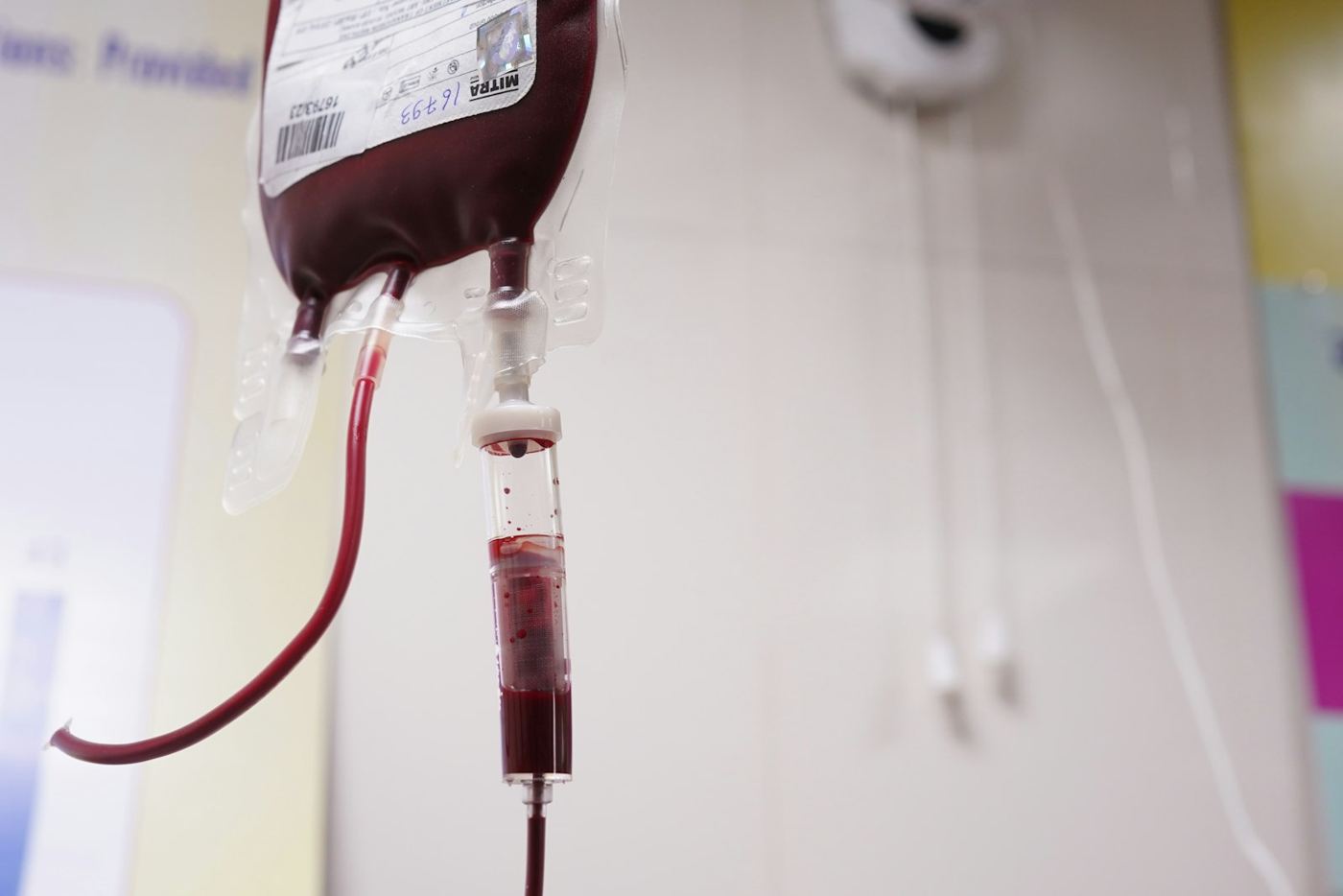
A cannula, a thin plastic tube, goes into a vein in your hand or arm unless you already have a longer-term line. The bag hangs from a stand and runs through a pump or a simple drip chamber. A bag of red cells generally runs for a couple of hours, while a bag of platelets often finishes well within an hour.
Observations during the drip, and signs of a reaction
A nurse takes your temperature, pulse and blood pressure before the bag starts, again soon after it begins and at intervals until it ends. The opening stretch of a transfusion is watched most closely, because that is when most reactions appear. You can read, doze or chat in the meantime, and you only need to speak up if something feels different.
Tell the nurse straight away about any of these; staff stop the transfusion at once and check you over:
- Shivering, feeling hot or a sudden fever
- An itchy rash or raised bumps on the skin
- Pain in your back or chest, or at the cannula
- Breathlessness, wheezing or a tight throat
- Feeling faint, anxious or just unwell
Why a study records each bag and the count before it
In thalassemia and lower-risk MDS, how often someone needs blood is one of the clearest signs of how the condition is going. A study therefore notes the date of each transfusion, how many bags were given and the hemoglobin measured just before. For platelet transfusions, the platelet count taken beforehand shows how far things had fallen when the bag was ordered.
Pairing every bag with the count that prompted it matters because hospitals and doctors set different points for giving blood. With both recorded, researchers can compare like with like across a study. If you have a transfusion somewhere other than the study center, such as your local hospital, tell the study team so the record stays complete.
Going without transfusions as a study goal
Some studies in MDS and thalassemia aim to cut how often people need blood, and the strongest result they look for is going without transfusions for a set stretch of time. Researchers sometimes call this transfusion independence. It is judged over weeks or months, written into the study plan beforehand, so one good month does not count on its own.
Whatever a study is testing, your transfusion plan belongs to your own medical team. Never skip or put off a booked transfusion because you feel well or because a study has begun. Talk to your hematologist first, since the timing of transfusions protects your heart and other organs from the strain of a low hemoglobin.
- Your blood sample is cross-checked against the chosen bags so only compatible blood is issued.
- Staff check your name, date of birth and wristband against the bag every single time.
- Shivering, a rash or breathlessness during the drip means staff stop it at once.
- Studies record each bag together with the count measured before it.
- Your transfusion plan changes only when your own hematologist changes it.