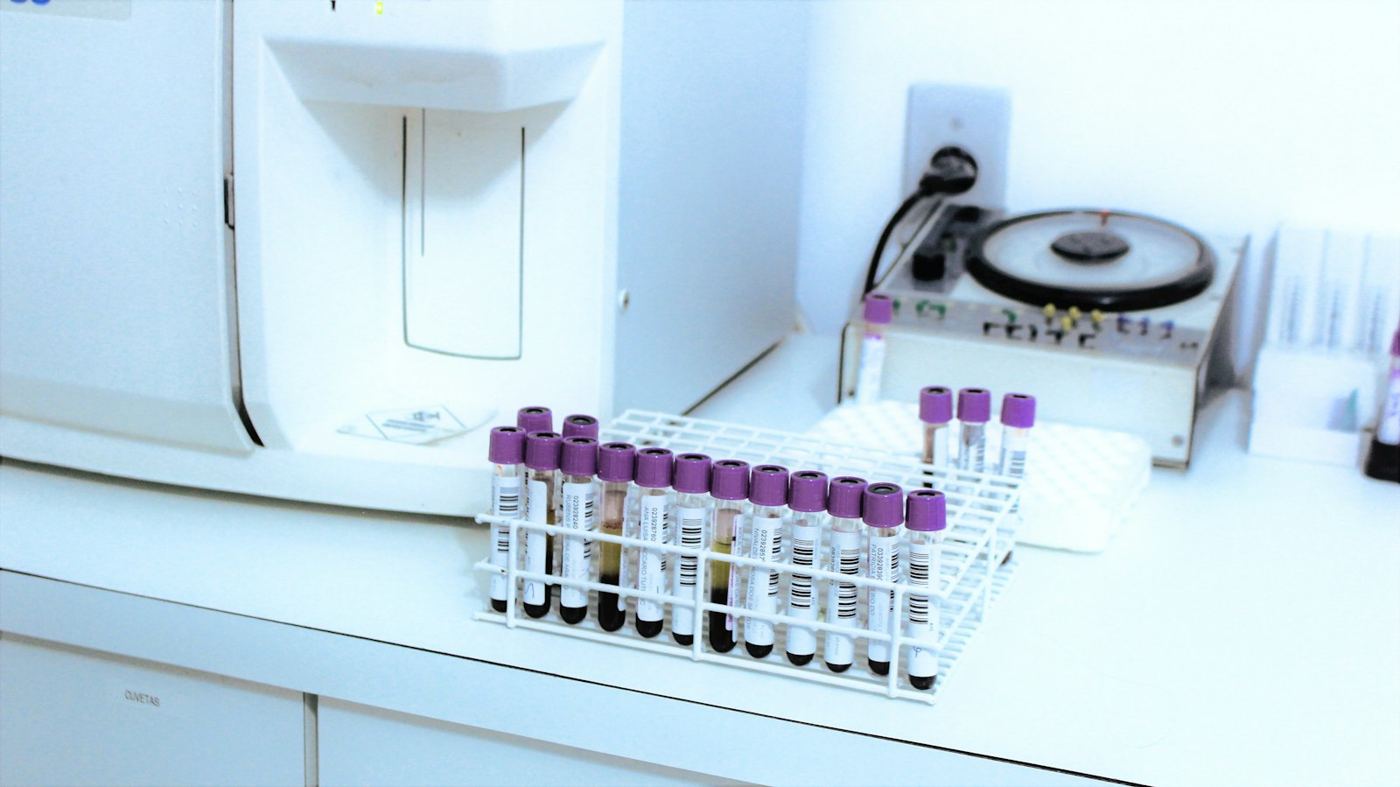
The full blood count, also called a complete blood count or CBC, is the test nearly every blood study asks for at visit after visit. It needs one small tube from your arm, and an analyser in the lab counts the red cells, white cells and platelets in it within minutes. This guide follows that tube from the needle to the printout: the gentle mixing, the microscope check, why a result moves between visits and what the words low and high mean on a report.
What the analyser counts in one small tube
The analyser sips a tiny amount of your blood and sends the cells, one at a time, through a narrow channel where light and an electrical signal size and sort them. It reports the number of red cells, the hemoglobin they carry and the hematocrit, which is the share of your blood taken up by red cells. It also counts platelets, the small cell fragments that start a clot.
The white cells arrive on the report split into their kinds, because each kind does a different job and a blood disorder can shift one without the others:
- Neutrophils, the first cells to reach a bacterial infection
- Lymphocytes, which include the cells that make antibodies
- Monocytes, which clear away debris and old cells
- Eosinophils and basophils, smaller groups involved in allergy and some infections
The purple-capped tube and the slow end-to-end tilt
A full blood count goes into a tube with a purple or lavender cap. Its inside is coated with a chemical that holds calcium out of reach, and without calcium the blood stays liquid so each cell can be counted separately. As soon as the tube fills, the person who drew it turns it slowly end to end several times instead of shaking it.
That rocking spreads the coating evenly through the blood. An unmixed tube can form tiny clots that trap platelets and make the count look falsely low, while a tube shaken hard can burst red cells. Either one usually means the lab asks for a fresh sample, so careful handling at the chair spares you a second needle.
When the analyser flags a sample for the microscope
Now and then the analyser prints a flag instead of a clean result: cells of an unusual size, platelets clumped together, or young cells it cannot place. A lab scientist then spreads a thin drop of your blood across a glass slide, stains it and looks at it under the microscope. This is called a blood film, and it comes from the same tube, so no extra blood is drawn.
On a film the scientist can see the shape of the red cells, whether platelets are truly scarce or simply stuck in clumps, and whether any white cells look immature. In thalassemia the red cells often look small and pale, and in MDS some cells can look oddly formed. The study team reads the film report beside the numbers.
Why your counts differ from one visit to the next
Counts move a little between visits even when your condition has not changed at all. Being short of fluids concentrates the blood and nudges the red cell numbers up, while drinking well thins it slightly. A cold or another recent infection can lift the white cells for a while, and some counts drift with the time of day or after hard exercise.
For that reason a blood study repeats the full blood count at visit after visit and watches the direction of travel, not one result in isolation. Many studies also try to draw blood at a similar hour each time. If you have been unwell since your last visit, tell the person taking the sample so a note goes beside the result.
What low and high mean on a blood count printout
Each line on a blood count report sits beside the span the lab treats as usual for healthy people. A result outside it is marked low or high, often with a letter or an arrow. Those marks describe where a number falls, not how serious it is, and plenty of healthy people sit just outside the span on an ordinary day.
A low platelet count is how many people with ITP first hear about their condition, and a raised hematocrit is often how polycythemia vera comes to light. In a study, the team reads each result against your own earlier visits. Never alter a medicine or treatment because of a printout you have seen; ask your own hematologist what it means for you.
- One small tube gives the counts of red cells, white cells and platelets.
- The purple-capped tube is tilted slowly so the sample neither clots nor breaks.
- A flagged sample is checked by eye on a stained blood film made from the same tube.
- Fluids, infection and the time of day can move a count, which is why studies repeat it.
- Low and high only show where a number sits; your own doctor explains what it means.