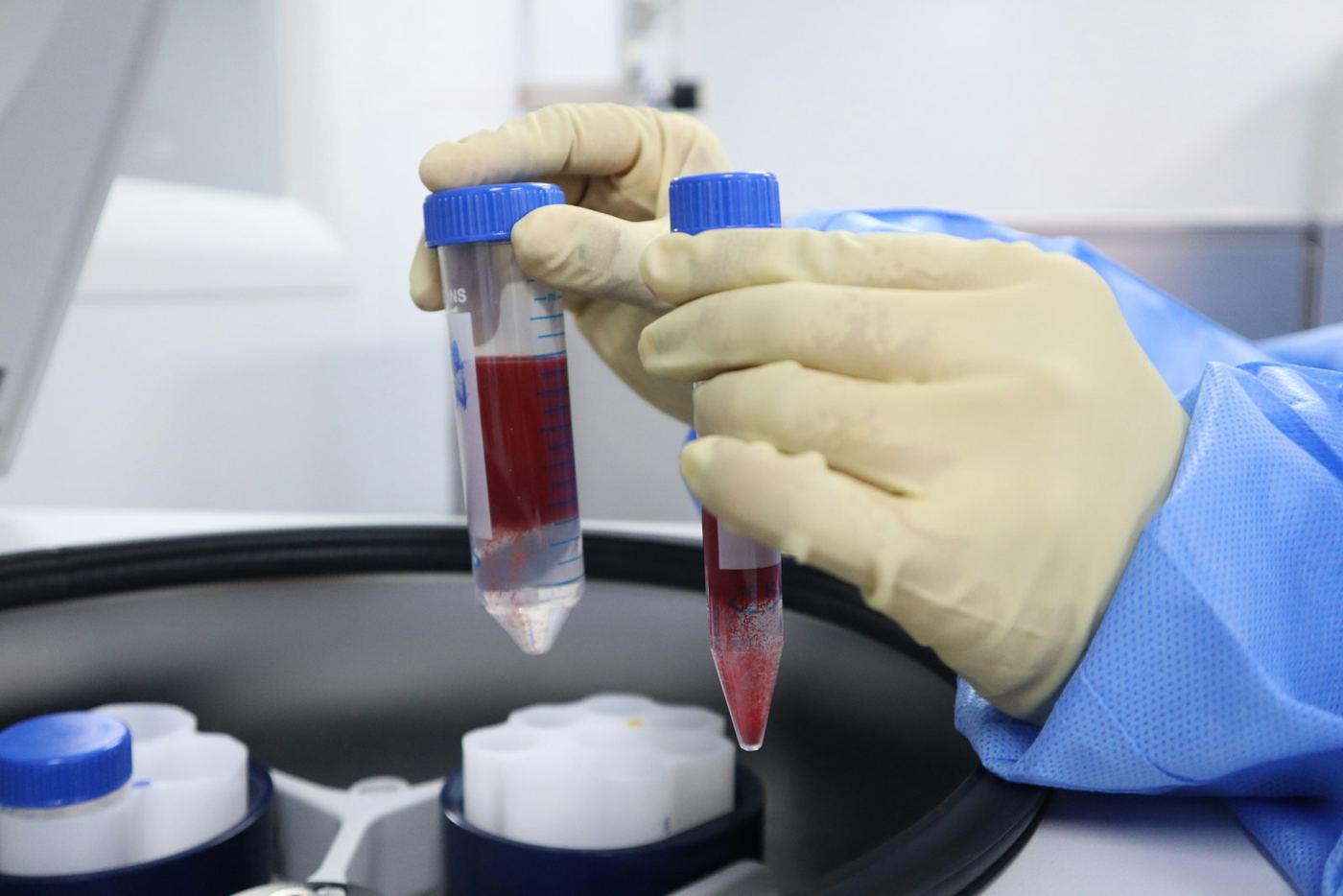
Clotting tests show how well your blood forms a plug and then a clot when a vessel is damaged. They matter most in von Willebrand disease and ITP, and they are among the fussiest samples a lab handles. This guide explains why the tube must be filled exactly, what clotting times and factor levels show, why some results change from week to week and what to tell the team before a sample is taken.
Why the light-blue tube is filled to the line
Clotting tests use a tube with a light-blue cap that holds a measured amount of liquid to keep the blood from clotting. The test works only when blood and liquid are in the right proportion, so the tube carries a fill line. A tube that is short of blood is too dilute, gives wrong results and will be turned away by the lab.
Sometimes the person drawing your blood fills a small discard tube first, which simply clears the line before the blue tube fills. The sample is mixed gently, kept at room temperature and sent to the lab promptly, because some clotting proteins fade within hours. A delayed or chilled sample can show low levels that are not really yours.
Clotting times and single factor levels
In the lab the plasma, the liquid part of the blood, is warmed and mixed with chemicals that set off clotting, and a machine times how long a clot takes to form. Two common clotting times test different branches of the clotting chain. A long time suggests a protein in that branch is low or not working, and it steers the lab toward the next test.
Factor levels measure single proteins. For von Willebrand disease, the lab measures how much von Willebrand factor is present, how well it helps platelets stick, and the clotting protein it carries and protects. Comparing these sorts the type: a common mild type with too little factor, types where the factor is faulty, and a rare severe type with almost none.
Why a von Willebrand result can shift and be repeated
Von Willebrand factor rises when the body is under strain, so anxiety, a hard workout, a cold or another infection, and pregnancy can all push it up. It also moves through the menstrual cycle, and many teams prefer to test in the first days of a period, when levels sit lowest. A rushed or difficult blood draw can raise it too.
Because of this, one normal result does not rule von Willebrand disease out, and studies often repeat the tests before settling on a level. Sit quietly for a few minutes before the sample if you can, and tell the team if you were ill, pregnant or exercised hard that week. Hormonal treatments can shift levels as well, so mention any you use.
Testing how well platelets work
A normal platelet count does not prove the platelets do their job. Platelet function tests show how well they clump and stick when exposed to substances that start clotting. One kind pushes blood through a tiny opening inside a machine and times how long a plug takes to seal it. Another, done in specialist labs, watches platelets gather in a sample over several minutes.
These tests are especially sensitive to everyday medicines. Some pain relievers, cold remedies and supplements can change platelet function for days. Let the study team know every tablet, remedy and supplement from the past couple of weeks. Do not stop any medicine to prepare for a test unless your own doctor agrees and the team has asked you to.
Bleeding questionnaires and what to mention on the day
Many studies also ask structured questions about bleeding across your whole life: nosebleeds, bruising, bleeding after a tooth came out, after surgery or childbirth, and how heavy your periods are. Everyone’s answers are scored the same way so they can be compared. Bleeding that will not stop, blood in vomit or urine, or a head injury while your blood clots poorly is an emergency: call 911.
On the day of any clotting sample, mention the following to the team, even if they seem minor:
- New or larger bruises, or tiny red-purple dots on the skin
- Nosebleeds, bleeding gums or dental work in recent weeks
- Periods that are heavier or longer than usual for you
- Any blood-thinning tablet or injection, including one taken daily on a doctor’s advice
- A recent operation, injury or infection
- The light-blue tube has to reach its fill line or the lab cannot use it.
- Clotting times survey the clotting chain; factor levels measure one protein at a time.
- Strain, exercise, infection, pregnancy and the menstrual cycle can raise von Willebrand factor, so tests are often repeated.
- Platelet function tests react to many common medicines and supplements.
- Tell the team about recent bleeding, dental work and any blood-thinning tablet.