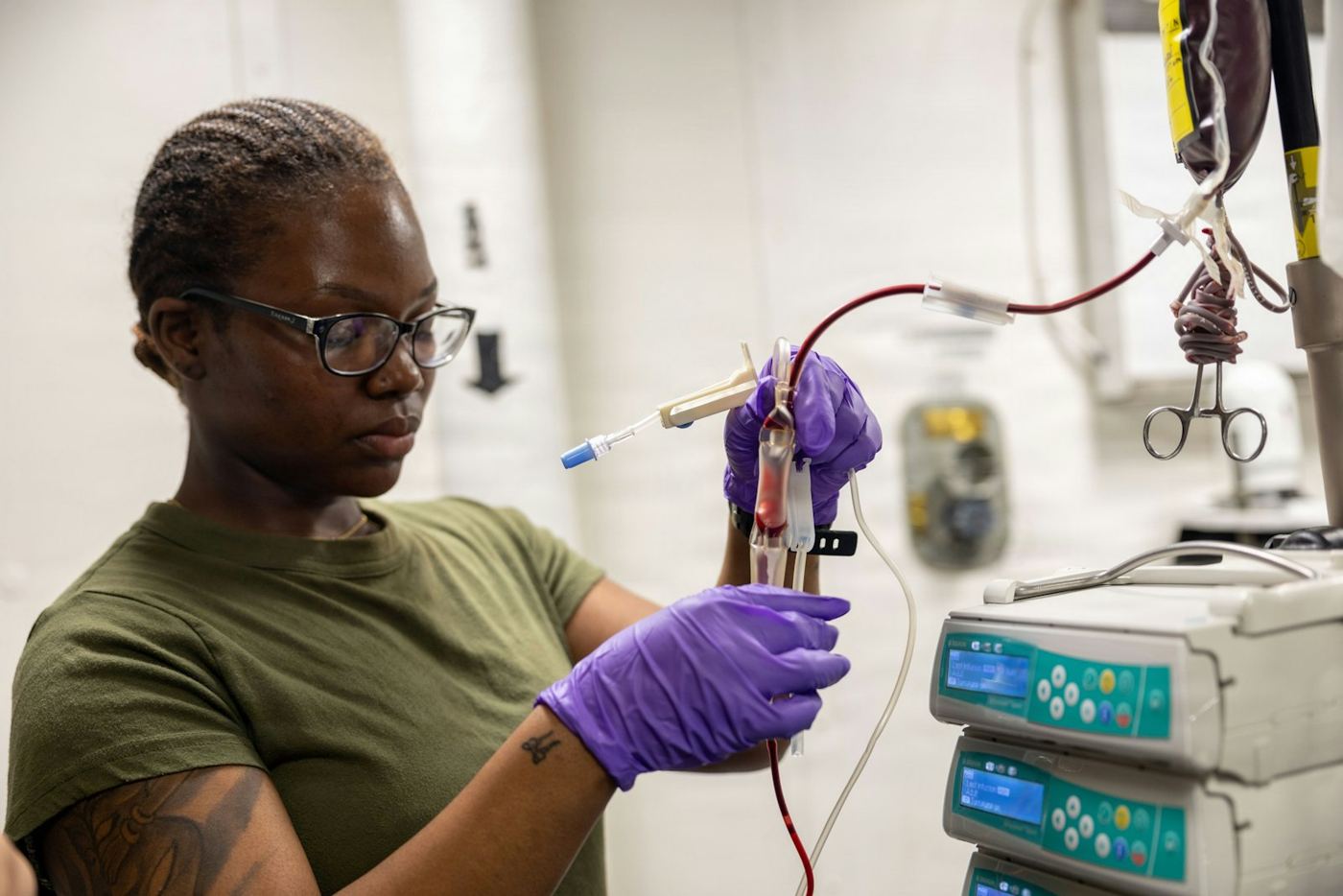
Polycythemia vera research looks for ways to keep thick blood thinner with fewer trips for venesection.
Polycythemia vera often comes to light on a routine blood count, or after months of headaches, a flushed face and an itch that flares after every warm shower. Here you can read what happens in the marrow, the kinds of treatment people use today and why research keeps going. It also explains the tests a study repeats, above all the hematocrit, the share of your blood taken up by red cells.
Polycythemia vera is a slow-growing condition of the bone marrow, the soft tissue inside large bones where blood cells are made. It belongs to a group of chronic blood cancers called myeloproliferative neoplasms, and many people live with it for a long time. A gene change that the marrow picks up during life, not one you were born with or can pass on, sets the marrow working too hard. It makes too many red cells, and often extra white cells and platelets.
With so many red cells the blood thickens and flows more slowly, which raises the chance of a clot in a vein or artery. People describe headaches, dizziness, a red face, blurred vision, burning in the hands or feet and an itch after a warm bath or shower. A swollen spleen can bring a full feeling under the left ribs. Polycythemia vera is usually found in later life, and many people feel well when it is first picked up.
Red cells, often with white cells and platelets
- Red cells
- White cells
- Platelets
- Clotting proteins
- Plasma cells
- Bone marrow
Current treatment for polycythemia vera
Treatment aims to keep the hematocrit down and the blood flowing. Venesection, having blood taken off at regular intervals, is the mainstay for many people. A low daily dose of a blood-thinning tablet is often added when a doctor advises it. Medicines that slow the marrow are used for people at higher risk of clots, as is an injected medicine based on interferon, a natural immune messenger. Newer tablets block an overactive signal inside the marrow cells.
Sudden weakness on one side, chest pain or a swollen, painful leg can mean a clot, which is an emergency: call 911.
Open questions about polycythemia vera
Venesection works, but frequent sessions leave many people low in iron and tired, and the appointments can be hard to fit around work. Itch, tiredness and a swollen spleen can carry on even when the counts look good. Over many years polycythemia vera can change into scarring of the marrow, and nobody can yet say for whom. Researchers want treatments that rein in the overgrowth itself, fewer venesections, better relief from itch and a clearer view of the long course.
Calming the overactive signal
Tablets that block the signal the gene change switches on, studied for their effect on counts, the spleen and symptoms.
Fewer venesections
Studies of medicines that hold the hematocrit steady so people need blood taken off less often.
Relief from the itch
Research on why warm water sets off the itch of polycythemia vera, and on treatments that quiet it.
Watching the gene change shrink
Work on measuring how much of the changed gene shows up in a blood sample, and whether treatment lowers it.
What a polycythemia vera study keeps count of
The hematocrit, visit after visit
The hematocrit is the share of a blood sample made up of red cells, worked out by the counter from their size and number. Studies follow it closely, since keeping it below the level your doctor sets is the main aim of treatment.
Venesections counted
Each venesection during the study goes into the record, dated. A shorter list of venesections over the same months is a sign a treatment is doing its job.
The spleen measured
A doctor feels under your left ribs to judge the size of the spleen, and some studies add an ultrasound or MRI scan. The scan gives a measurement that can be set beside the next one.
Itch, tiredness and clots
Questionnaires ask how much itch, tiredness, night sweats and other symptoms trouble you. The team also notes any clot, however small, and how it was treated.
Your blood draw on a study visit
Blood thick with red cells can be slow to fill a tube, so I take my time at a polycythemia vera visit. Keep your arm warm and drink some water beforehand if your team says that is fine; both help the vein. After the band and a quick clean, the needle goes in and the tubes fill one after another, each with its own colored cap for a different test. One goes to the counter for the hematocrit and the other counts. Some studies send a separate tube to a lab that looks for the gene change in your white cells. On a venesection day, the study samples can come from the same needle before the larger amount is drawn off.
Your own treatment in the meantime
Keep to your venesection schedule and take every tablet or injection just as your hematologist set it, including any low-dose blood thinner. Tell the study team the dates of your recent venesections, the medicines that slow your marrow and any itch or skin treatments. Never skip a venesection or a blood thinner to get ready for a study visit; that call is your own hematologist’s, talked through with the study team. Sudden weakness on one side, slurred speech, chest pain or a swollen, painful leg is an emergency.
Worth asking a polycythemia vera research team
- Will the study take over my venesections, or will my own clinic keep doing them?
- How often will you check my hematocrit, and will my hematologist get the results?
- Does the study measure the spleen with a scan or only by examination?
- Will you ask about my itch and tiredness, and how often?
Lab words, translated
- Hematocrit
- The share of your blood made up of red cells; in polycythemia vera it runs high and treatment aims to bring it down.
- Venesection
- Taking off a measured amount of blood through a needle in the arm to thin it, also called phlebotomy.
- Myeloproliferative neoplasm
- A group of slow-growing marrow conditions in which the marrow makes too many of one or more kinds of blood cell.
Questions about polycythemia vera
No. The gene change behind polycythemia vera happens in the marrow during life, so you were not born with it and cannot pass it on to your children. That sets it apart from a few rare inherited conditions that also raise the red cell count. A hematologist can tell them apart with blood tests, including one that looks for the gene change in your white cells. Relatives do not usually need testing because of your diagnosis.
Many people with polycythemia vera feel a prickling, burning itch after contact with warm water, sometimes lasting an hour or more. The cause is not fully understood, but cells in the skin that release histamine and other signals seem to play a part. It can be one of the hardest symptoms to live with, and studies often ask about it in detail. Your hematologist can suggest ways to ease it, so tell them how much it bothers you.
Often, yes, and that is partly the point. Each venesection removes iron held in red cells, and lower iron slows the marrow’s making of new ones. The trade-off can be tiredness, poor concentration or sore, cracked lips. Studies often check ferritin, the blood test for stored iron, for this reason. Check with your hematologist before taking any iron tablets, because extra iron can push the red cell count straight back up.
Your next step is to call or write to the study team using the details on the study itself. Clinical Pillar does not run, fund or recruit for any study, and it sends your name, number and chosen condition to nobody. What it sends now and then is news about polycythemia vera research around your ZIP code, and opening a message commits you to nothing. The study team answers your questions, and the people running it decide who takes part.