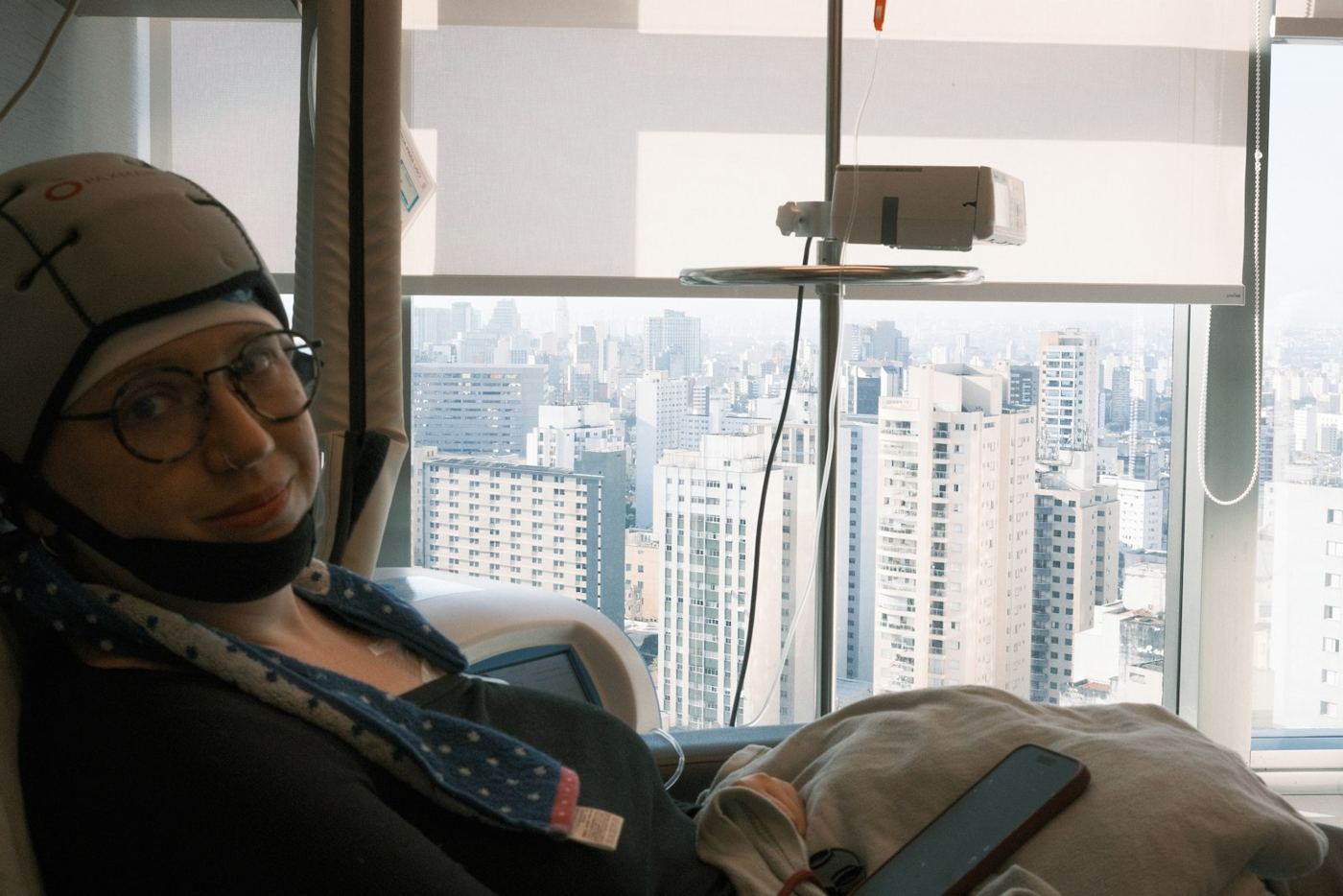
Thalassemia research looks for ways to need fewer transfusions and keep iron from building up in the body.
For some people thalassemia means nothing more than slightly small red cells on a blood test; for others it means a transfusion every few weeks from early childhood. This page explains what goes wrong with hemoglobin, the kinds of treatment in use and the research that hopes to change them. It also follows a study through transfusion day and the iron scans, including the MRI that reads iron in the heart and liver.
Hemoglobin is the protein that fills each red cell and carries oxygen from the lungs to the rest of the body. In thalassemia the body makes less of the normal kind, so red cells are small, pale and short-lived, and anemia follows. Carrying the trait usually means mild anemia or none and needs no treatment. The serious forms are grouped by whether people need transfusions regularly or only now and then, and they cause severe anemia from early childhood.
Without enough healthy red cells, people with the serious forms feel tired and short of breath, grow slowly as children and may have an enlarged spleen and bone changes as the marrow works overtime. Regular transfusions relieve that, but each one brings iron the body cannot shed, and over time it builds up in the heart, liver and hormone glands. Thalassemia is more common in families with roots in the Mediterranean, the Middle East, South and Southeast Asia and Africa.
Hemoglobin inside red cells
- Red cells
- White cells
- Platelets
- Clotting proteins
- Plasma cells
- Bone marrow
Current treatment for thalassemia
Carriers of the trait need no treatment. For the serious forms, regular red cell transfusions keep hemoglobin up, and medicines taken by mouth or given under the skin remove the extra iron, which is called chelation. Folic acid supports the marrow. A stem cell transplant from another person can replace the marrow for some, usually children with a closely compatible brother or sister. Newer gene-based treatments and medicines that help red cells mature are in research, and some are already in use.
Open questions about thalassemia
Lifelong transfusions mean hours in a chair every few weeks, and iron removal is a daily task that many people find hard to keep up. Iron damage to the heart remains a serious risk. A transplant is not possible for everyone, and gene-based treatments are complex and not yet widely available. Researchers want medicines that let the body make more working red cells, gentler ways to remove iron, and treatments that reach more people.
Gene-based treatments
Studies that change or add to a person’s own stem cells so the marrow makes working hemoglobin, then return them by infusion.
Helping red cells mature
Research on medicines that help red cells finish growing in the marrow, so fewer transfusions are needed.
Gentler iron removal
Studies of chelation that is easier to take every day and that clears iron from the heart and liver more steadily.
The forms that need fewer transfusions
Work on thalassemia that needs transfusions only now and then, where anemia and iron build-up still cause harm.
What a thalassemia study keeps count of
Hemoglobin before each transfusion
A blood sample taken just before a transfusion shows how far your hemoglobin has fallen since the last one. Studies follow this low point closely, since a higher low point means the marrow is doing more of the work.
Transfusions counted
The team records every unit of blood you are given, with the dates. Going a set stretch with fewer transfusions, or going without them, is the main thing many thalassemia studies look for.
Ferritin and liver iron
Ferritin, a blood test for stored iron, is checked often, and an MRI of the liver measures the iron held there more precisely. The scan needs no injection, only a while lying still.
Heart iron by MRI
A heart MRI reads how much iron has settled in the heart muscle. It is a key safety check, since heart iron can build up even when other results look reassuring.
Your blood draw on a study visit
Before a transfusion comes the sample that is cross-checked against your blood group, so every bag is compatible, and it is often taken a day or two ahead. I label that tube by hand at your side and read your name and date of birth aloud, because that tube is the safeguard for every bag that follows. On the day, the nurse places a cannula, takes a little blood for your hemoglobin and any study tests, then starts the drip. Each bag is checked against your details again before it runs. Bring something to read; the chair is yours for a few hours.
Your own treatment in the meantime
Tell the study team your transfusion schedule, the chelation medicine you use and how you take it, any folic acid and other medicines, and the dates of your last iron scans. Keep every transfusion appointment and keep up your chelation exactly as your hematologist prescribed, even on days that feel fine. Changing a transfusion plan or an iron medicine, including in the run-up to a study, is for your hematologist and the study team to decide together.
Worth asking a thalassemia research team
- Will my transfusions stay with my usual clinic, or move to the study site?
- How often will the study scan my heart and liver for iron?
- Would joining mean switching from the chelation medicine I use now?
- Will you share my hemoglobin and ferritin results with my own hematologist?
Lab words, translated
- Hemoglobin
- The iron-rich protein inside red cells that picks up oxygen in the lungs and releases it around the body.
- Chelation
- Treatment with medicines that bind extra iron so the body can pass it out in urine or stool.
- Ferritin
- A protein that stores iron; a ferritin blood test gives an estimate of how much iron the body holds.
Questions about thalassemia
Carrying the trait usually means slightly small red cells and mild anemia or none, and it needs no treatment. It is worth knowing about, because it can look like iron deficiency on a blood test, and iron tablets will not correct it. Most thalassemia studies are for the serious forms, though some research includes people with the trait. Questions about carrying it, and what it could mean for children, belong with your doctor or a genetic counselor.
Each bag of transfused blood carries iron inside its red cells, and the body has no way to shed extra iron on its own. In thalassemia the gut may also absorb more iron than usual, even without transfusions. Over the years the excess settles in the liver, heart and hormone glands and can damage them. Chelation medicines bind the iron so it can leave the body, and regular ferritin tests and MRI scans show how well that is working.
In general terms, some of your own blood-forming stem cells are collected, changed in a lab so they can make working hemoglobin, and returned to you by infusion after strong treatment clears space in the marrow. The process takes months and includes a long hospital stay. For some people it has meant far fewer transfusions. Research continues on making it safer and simpler, and your hematologist can say whether it is relevant to you.
No. Clinical Pillar shares nothing about you with any study, hospital or sponsor. It sends occasional news by email, or by text if you ask, about thalassemia research near your ZIP code, and that news never enrolls you or reserves a place. Should a thalassemia study appeal to you, the first move is yours: call or write to the team at the details on that study. Its staff talk you through the details and choose who takes part.